
Why choreographer Rodrigo Pederneiras and Grupo Corpo are celebrating the 'godfather of Brazilian music' Gilberto Gil at EIF
Grupo Corpo return to Edinburgh with a dazzling double bill which pays tribute to Brazil’s musical superstar Gilberto Gil, writes Kelly Apter
It’s not unusual for musicians to comment on the political zeitgeist, but rarely do they do so from a seat of power. Dubbed one of the “godfathers of Brazilian music”, Gilberto Gil has been composing and singing since the early 1960s. But between 2003-2008, he also served as Brazil’s Minister of Culture. Small wonder, then, that Brazilian dance company Grupo Corpo was drawn to his aesthetic.
“Gil is a composer whom we greatly admire and who holds significant importance in Brazilian culture,” says choreographer Rodrigo Pederneiras. “From a young age, I was deeply influenced by his political and artistic life, following his journey over the years. I remember the first song of his that I heard was Procissão, which speaks about a religious procession pleading for rain in an area devastated by poverty. The lyrics and melody profoundly affected me, awakening an admiration for Gil’s ability to address social and cultural themes with such sensitivity.”
Founded in 1975, Grupo Corpo was one of Brazil’s first independent contemporary dance companies and, unusually, they don’t hail from Rio de Janeiro or São Paulo. Based in the city of Belo Horizonte, their repertoire is built on a bedrock of musical collaboration, working closely with groups and composers for each new piece they create – the latest of which is Gil Refazendo and Gira, a double-bill which heralds Grupo Corpo’s return to the Edinburgh International Festival following their crowd-pleasing performance in 2010.
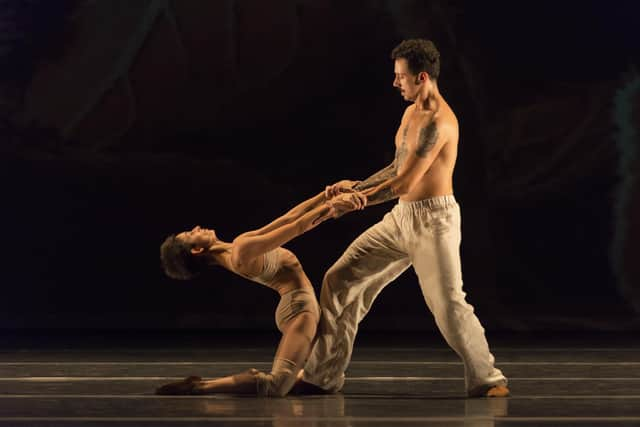

Gil Refazendo, which translates as “Gil Remaking”, first saw the light of day in 2019 when Grupo Corpo paid homage to Gilberto Gil’s life and work to date. However, in a refreshing display of honesty, the company decided their original piece, Gil, did not do the man justice, and went back to the drawing board.
“We had high expectations and a sense of responsibility in creating Gil but despite our efforts, our initial work didn’t meet the level of quality we aimed for and were accustomed to producing,” explains Pederneiras. “Then came the Covid-19 pandemic, which transformed the world with its tragedies, pauses, reversals, reflections, and all the upheavals we experienced during that time. We used this involuntary break to refine the work, and the global shift in circumstances offered us a new perspective and a unique opportunity to revisit it with fresh eyes.”
And so Gil Refazendo was born, with new, re-configured choreography and staging but retaining the soundtrack Gil had already supplied. “We chose to keep the original music intact,” says Pederneiras, “as it remained the emotional and thematic anchor of the work, preserving its spirit and original intention. For the piece, Gil revisited his most significant repertoire, bringing to light songs that not only marked an era but also reflected important political and social scenarios.”
In keeping with this year’s International Festival theme of “Rituals That Unite Us”, the other half of Grupo Corpo’s double-bill is inspired by the rites of Afro-Brazilian religion Umbanda. Once again, music plays a central role, with the score for Gira (meaning “spin”) coming from Brazilian trio Metá Metá. Pederneiras was unfamiliar with the band until his brother Paulo (Grupo Corpo’s artistic director) invited them to compose an original soundtrack for the company.
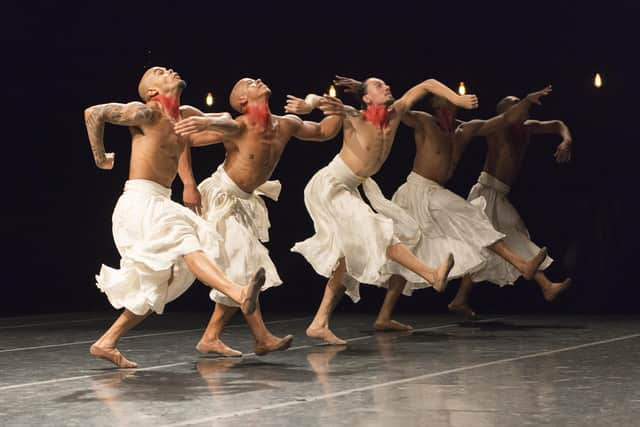
“What captivates me about Metá Metá, is their distinctly unorthodox sound, which defies categorisation within traditional genres such as jazz, pop, or MPB (Música popular brasileira),” says Pederneiras. “They themselves describe it as music not intended for mainstream radio. It stands out for its unique blend of influences and unconventional approach, making them a refreshing departure from the norm in contemporary Brazilian music.”
Pederneiras’s choreographic work always begins with the soundtrack. “I begin by listening to it thoroughly, sketching the atmosphere I intend to create, and planning the spatial arrangement of elements on stage,” he says. “However, the sequences are not fully explored until I begin working with the dancers. Although over time, I’ve reduced the preparatory stage because I prefer not to be tied to preconceived ideas, and would rather explore the possibilities of continuous creation.”
While the music genre may vary, Grupo Corpo’s movement style stays largely the same. The spellbindingly fluid, almost languid, motion of the company’s talented dancers, most of which leads from the hip, has built a fan base worldwide. It’s the kind of dancing that looks supremely effortless but is forged in intense training. And no matter what their dance background, classical ballet is the machine that drives each dancer’s technique.
“From my point of view, classical ballet is the base for the dance,” says Pederneiras. “So our dancers take classical ballet classes every day to be able to dance my choreographies. However, they all come from different schools and have different experiences shaping their styles. I create choreographies for each person, trying to get their best. The integration of classical ballet and Grupo Corpo style is made every day in rehearsal.”
Pederneiras has been in-house choreographer at the company since 1981, when he retired from dancing. And throughout Grupo Corpo’s history, the close-knit relationship between brothers Rodrigo and Paulo has remained the beating heart of the operation (with Paulo’s son Gabriel also coming on board as lighting designer).
Not a blood relative but equally embedded in the company is costume designer Freusa Zechmeister, who dreams up Grupo Corpo’s distinctive attire. “We’ve been working together for nearly 50 years,” says Pederneiras. “So we have a well-honed modus operandi and can grasp intentions even in the midst of an unfinished process. At times we disagree, which proves beneficial to the creative process as our differing perspectives enrich the work. This dynamic of constant challenges drives us to elevate our standards with each new creation.”
Grupo Corpo: Gil Refazendo and Gira, Edinburgh Playhouse, 5-7 August. For more information and to book tickets, visit www.eif.co.uk