
EIF music reviews: Alisa Weilerstein | Vilde Frang & Friends | Víkingur Ólafsson
In our latest music round-up from this year’s EIF, our critics review a marathon performance of Bach’s cello suites, a concert exploring Bartók’s folk influences and a piano recital that intersperses Bach with Beethoven
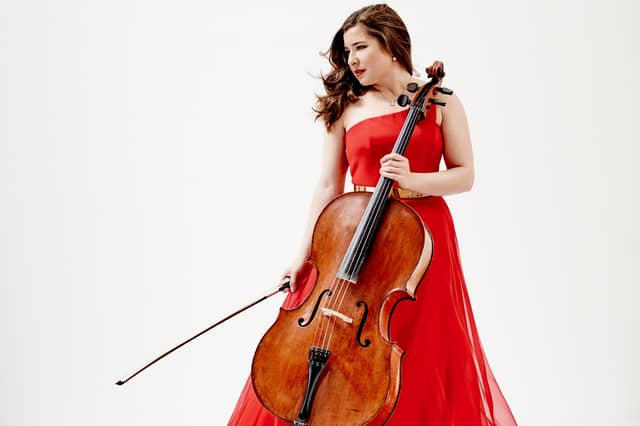

Alisa Weilerstein plays the Cello Suites ★ ★ ★ ★ ★
Usher Hall
Did JS Bach intend his six solo cello suites to be experienced in a single sitting? It’s very unlikely. Is it nonetheless a good idea to hear them in that way? Frankly, the jury’s out – it’s an immersive and also a draining experience, but Alisa Weilerstein’s complete survey of them made a powerful case in her afternoon recital during the International Festival’s (almost) all-Bach day.
For a start, she dug deep into the six suites’ flow of moods and emotions, most evidently between a raw, deeply tragic Fifth Suite in C minor and a tentatively brighter, more joyful Sixth Suite in a ringing D major. Within the suites themselves, too, she brought the dance sections’ sense of movement vividly alive, and she approached slower, more serious sarabandes and sometimes preludes with a wonderfully fresh spontaneity, as though discovering the music for the first time.
Enjoying The Scotsman's coverage of the Edinburgh festivals? For just £2 a month you can get unlimited access to scotsman.com plus 2-for-1 Fringe tickets. For details visit www.scotsman.com/subscriptions
Her sheer stamina was remarkable across almost three hours of solo music, as was her clear-headed navigation of the music’s trajectory, both within individual suites and across the collection as a whole. It made for a demanding afternoon, for sure, and there’s always a question of whether ‘complete cycle’ marathon concerts really do their music justice. But Weilerstein delivered unflagging prowess and musical insights that bordered on the spiritual. David Kettle
Vilde Frang & Friends ★ ★ ★ ★
Queen’s Hall
Folk music and dance has influenced many composers, none more so than Bartók with his compositions steeped in the atonal dissonances and swerving rhythms of Hungarian music. In this lively programme, violinist Vilde Frang placed Bartók’s work alongside contemporary arrangements and compositions of Hungarian folk music from brothers Benjamin and Salamon Eredics. They were joined by pianist Olli Mustonen for a haunting 19th century Balkan Farewell before Frang and Mustonen launched into Bartok’s 1921 Violin Sonata No.1. This is a meaty, intense work starting out with both instruments on an equal footing exchanging agitated ideas. By contrast, the adagio was more contemplative, with Frang’s moody silvery violin lines interrupted by sparkling piano riffs that twinkled like distant stars.
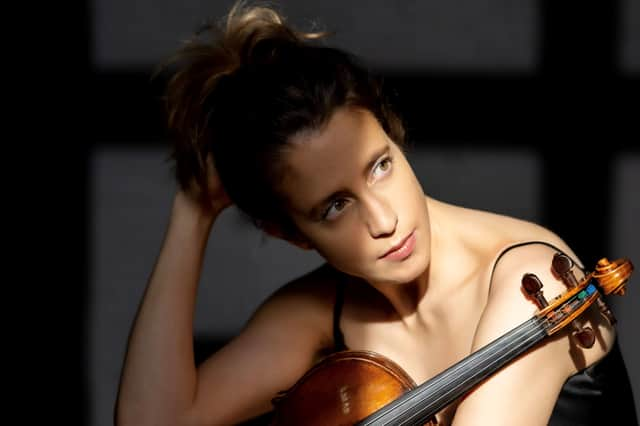
The second half of the concert focused on a selection of short folk dances and improvisations, with Frang joined by Salamon on accordion and Benjamin on trumpet for a bluesy version of Don’t Leave Me Here from Bartok’s 27 Two and Three-part Choruses. Benjamin Eredics’s frenetic Trio Ornamentum – with himself on the guitar-like kontra, Salamon vamping on piano and Frang on violin – brought the house down with their slick interactions. They were clearly having fun and there were smiles of enjoyment all round. Susan Nickalls
Víkingur Ólafsson plays Bach & Beethoven ★ ★ ★ ★
Usher Hall
There is a curious intimacy to hearing a pianist perform in the hushed vastness of the Usher Hall at night. In the spotlight hunched over the keyboard, Víkingur Ólafsson delivered an immaculately crafted sound world. But while he plays with clarity and brightness, his overly sensitive approach to dynamics doesn’t always serve the music.
This programme focused on pieces by Bach, Beethoven and Schubert, and with the surtitles outlining pieces and movements, he was able to perform uninterrupted by clapping. However, with no pause for reflection between the different composers, styles became blurred so that at times his Bach and Beethoven sounded more like Schubert.
Central to Bach’s contrapuntal music is a steady rhythm and exacting interactions between the different parts. Too often this was comprised in Partita No 6 in E minor when Ólafsson tugged at too many essential threads, pulling the music out of shape. The same thing ran through the two Beethoven sonatas which lacked the composer’s sense of playfulness and surprise.
It was the first two movements of Schubert’s unfinished Piano Sonata in E minor D566, with its racing scale passages and inbuilt ebb and flow of the phrasing, that Ólafsson captured most faithfully and beautifully. Susan Nickalls
The Scotsman’s arts newsletter is now sent twice a week - subscribe today
Enjoying the Arts & Culture journalism on scotsman.com? Make it easier to find by selecting us as a preferred Google source
Want the latest Scottish headlines sent directly to your phone? Sign up to our new WhatsApp channel here
Comments
Want to join the conversation? Please or to comment on this article.