
Kirsty Wark: How Rishi Sunak did me quite a big favour
The Newsnight presenter brings BBC’s Front Row arts show to Scotland
When award-winning television journalist Wark said “goodnight and good luck” to the BBC's nightly current affairs show Newsnight after 30 years presenting the programme last month there was no danger that the broadcasting titan would be switching off. After a brief holiday in her beloved Arran, she’s back presenting Radio 4’s Front Row from Scotland every week, with the first episode coming live from the Edinburgh Festival.
Covering the world of art, literature, film, media and music, Front Row will highlight the must-see shows, events and exhibitions happening across the UK and around the world and is moving to Glasgow as part of a commitment to increase content made in Scotland and Northern Ireland.
“I have been so lucky to have been given a true labour of love and I’m looking forward to many conversations and performances right across the artistic spectrum and beyond,” says Wark.
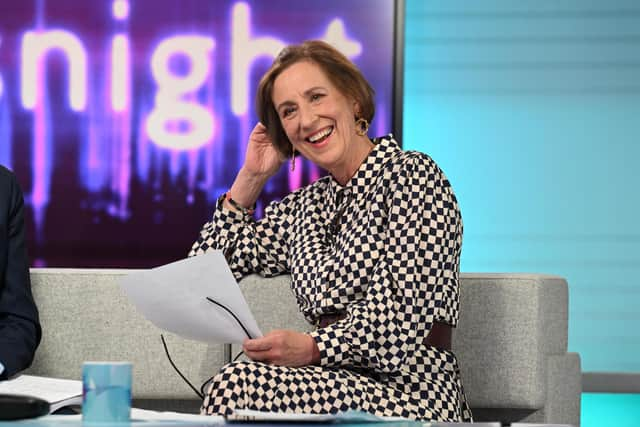

Wark took a break in her busy schedule making BBC documentaries on the fashion that made modern Scotland and the Radio Four series The Reunion, which reunites people involved in a moment of modern history, to talk about her new presenting role. Music journalist Kate Molleson will also present some editions from Glasgow.
Arts coverage has always been a passion for Wark, who as well as presenting Newsnight and probing politicians from Margaret Thatcher to Keir Starmer, fronted its arts strand Newsnight Review and the ground-breaking The Late Show, interviewing cultural giants from Margaret Atwood to Harold Pinter. As if that’s not enough, in her spare time she writes bestselling novels, with her 2014 debut The Legacy of Elizabeth Pringle and The House By the Loch in 2019 and she is currently working on a new historical fiction set in Glasgow.
For Wark, there is no big divide between politics and culture and she’s enthusiastic about both.
“I have always found that people interested in politics are just as interested in culture and vice versa so I see this new role as an extension of everything that I hold dear,” she says.
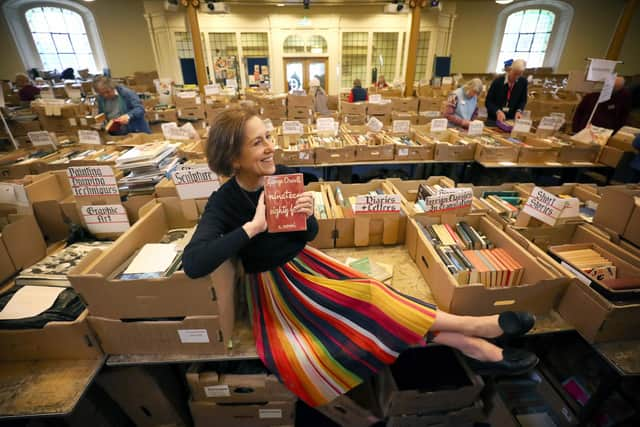
“I think you are just an interested human being, whether you’re interested in politics or culture. Culture isn’t for others, it’s for everybody, and Front Row will reflect that. Culture is for everybody in all its guises. Arts and culture should be central to people’s lives because it’s part of our wellbeing.”
She’s also enthusiastic about fashion and is as remarkable for her outfits as her searing insights and probing questions, so we quickly discuss what’s in the fashion documentaries.
“All sorts of people. From people in the Borders like Bernat Klein - I was down at his house High Sunderland, in the Borders and it’s absolutely amazing. I'm doing Christopher and Tammy Kane, Sharleen Spiteri, La Fetiche in Glasgow. There’s so much, there’s Jonathan Saunders, Nicholas Daley. It’s a kind of passion project and I’m so glad the BBC commissioned it.”
But we’re here to talk about Front Row, not the fabulous top Kirsty is sporting today, so what can she tell us about the first edition that will be coming live from Dynamic Earth in Edinburgh on Tuesday? [13 August]?
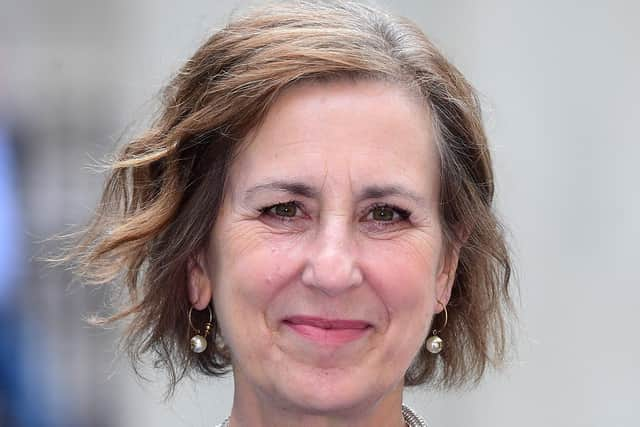
“It's a live show and an audience show and the audience is already full,” she says, but there’s no limit to the numbers who can tune in on the radio.
“Teenage Fanclub are playing live, and we’ve also got Nish Kumar, Rose Matafeo and Miriam Margolyes. It’s a mixture of what’s going on at the Festival. I’m very keen that Front Row will continue to embrace spoken word in all its forms, and music, because I think that has great immediacy when you’re live.”
While the show will often air from the BBC’s Pacific Quay HQ in Glasgow, giving Wark a much shorter commute from her home in the city’s West End where she lives with husband, TV producer Alan Clements, the aim is to move it around the country.
“That doesn’t mean the whole programme will be about Scotland,” she says. “We’re going to do reviews and some things that are Scotland focused, but so much of what Scotland is is international. It’s for everybody.”
With Front Row reflecting what’s on at The Edinburgh Festival, what’s on Wark’s must-see list?
“I’m going to see Outrun at The Lyceum and we’ll be covering that on Front Row and also Outrun the film with Saoirse Ronan, and who knew there are two Fringe offerings about Gwyneth Paltrow’s skiing accident? I’m going to see the June Carter Cash show and probably some comedy, hopefully Matt Forde.
“I love the Festival,” says Wark, whose first visit was at 15, and at 69 her enthusiasm is undimmed.
“I remember going to the church at the top of St Stephen’s Street to see Sweeney Todd the Barber and it still stands out in my mind. That excitement as a youngster. You could come through to Edinburgh and really couldn’t afford to go to things but could breathe in the Festival out in the streets.”
Where does Wark think her interest in the arts comes from?
“I suppose it’s childhood. My parents, grandparents. I remember going to stay with my granny and she had this massive wall of books and poetry. She and my grandfather used to give each other poetry books, inscribed to each other. I’ve still got them. So I was encouraged to read from a very young age and I’ve still got a book I got for my fifth birthday, Poems to Read Out Loud. It’s the very act of having a book in front of you, and I’m such an advocate of that rather than kids being online. I think the feel of a book, holding it in your hands, is so important.”

She started frequenting libraries as a child in Kilmarnock, and they remain central for her, part of her belief that culture is for everyone.
“Because libraries are not only a wonderful space for flowering, they’re a safe space,” she says.
“I had my library card from the youngest age I could have it and remember sitting at the small chairs and tables. Then when I got pocket money there was a great book shop nearby and sometimes I would buy a paperback but I always used the library, although we were a house stuffed with books. In fact after my father’s death one of the first things I did was take back his library books and his library card. I think libraries are such a great joy for people and every town and village should have one. Mobile cinemas are great too.”
Wark was the longest serving presenter on BBC Two’s Newsnight, starting on the programme in 1993, so was it emotional leaving it behind?
“It was emotional, but it was the right thing. I was ready to go and I’d said last October I’d go at the election so in a way Rishi Sunak did me quite a big favour because I got to start Front Row at the Edinburgh Festival and I can’t think of a better way to start.”
“What is so lovely is the Festival is such an optimistic place and I think we need optimism. And I always think Edinburgh is a place with every single nationality, especially during the Festival, and I think that’s incredibly important just now. And just walking down the street is an enriching experience, even if you don’t have money to go to lots of performances. It’s just seeping in this atmosphere - we all walk the same streets.”
Given that Wark has been in journalism for decades and interviewed so many of the big political and cultural players, as well as covering the events that have shaped our lives, what are some of the things that made the biggest impression?
“Gosh, I’ve been so lucky. Harold Pinter’s last interview. Hearing Barack Obama in 2004 at the Democratic National Convention in Boston and it wasn’t just me, for god’s sake I’m not some kind of seer, but everybody just looked at each other and thought this could be a president of the United States and how amazing that was.
“Also covering terrible things that have happened in Scotland and giving them grace has been very important to me, whether it’s been Lockerbie or Dunblane.
“But mostly, some of the people I have met who have been quite extraordinary in what they do. Everybody has a story to tell and I love bringing these stories to light, whether it’s on the menopause in Scotland - and I’m doing a follow up documentary for Panorama - or walking down the street with somebody and they’ve been a volunteer first aid worker in a far off country. We should never underestimate the people we rub shoulders with every day. It’s not just about the famous people I always say.”
What was it like to interview Margaret Thatcher on BBC1 back in 1990, an encounter that lives on in many memories.
“It’s extraordinary. It really cut through. And I think it cut through partly because she didn’t like being interviewed by women frankly, and because she just was so out of sync with Scotland. She couldn’t understand why people weren’t embracing her policies, why they wouldn’t vote for her. She just couldn’t get her head round that.”
How about her interview with playwright Harold Pinter, did she know it would be his last?
“I knew he was a bit frail, failing. It was impressive because he was very open and talked about the things that had worked well, the things that hadn’t worked well.
“I’m also so glad to have interviewed Edna O’Brien who I then went on to know a little bit. The Country Girls was so important in my teenage years and she actually suffered greatly for that. Then Girl with Green Eyes, Girls in their Married Bliss, I had never read anything like that in my life. It was phenomenal.”
If she had the chance to interview a subject again, alive or dead, who would it be?
“Definitely Seamus Heaney and Edna O’Brien. Because they mattered a lot to me and I loved Seamus Heaney’s poetry, and those books of Edna’s. I wish I had spoken to her before she died. And Seamus as well, I wonder what he would make of the world now. I always wonder what people would make of the world they’ve left behind.”
If Wark was ever only allowed to pose just one question to an interviewee, what would it be?
“What has given you great joy in your life?” she says immediately.
So what has given her great joy in her life?
“Oh family. The children particularly, obviously Alan, but the children,” she says referring to grown up offspring, Caitlin and James. “I’ve been very, very lucky.”
With more time on her hands now, Wark will be able to return to her own writing. With The Legacy of Elizabeth Pringle set in Arran and The House By The Loch in Galloway, she is now working on a historical fiction set in 19th-century Glasgow.
“I’m very late with it which is another great reason to, when I get some time, finish it. It’s set around 1890 when Glasgow was really flourishing and again it’s a kind of matriarchal, multi-generational story.
When I ask her about her writing process and routine, she laughs.
“My routine is to procrastinate as much as possible and do stuff around the house I would never think of doing. But once I’m in it it’s almost like an endorphin rush. I am actually in another space and it’s very hard to wrench myself out. But on the other hand I can write wherever. I interviewed Jonathan Franzen and he puts ear plugs in and unplugs everything, has to be in total silence and I thought ‘wow that must be how you write’, then I interviewed Donna Tartt a couple of times and she was ‘aw Kirsty I write on the bus into New York and I write in the New York public library and I take notes’, and I thought yeah, that’s much more like the way I’d like to write. I write notes, all the time, scribble phrases or little scenes, in notebooks - in fact I lost one. I realise I need to be much more disciplined and get into it.”
It’s no surprise she’s behind with the book, given her busy schedule. As well as the fashion documentaries, she has just wound up a Reunions episode on Tony Blair’s First 100 days.
“And last week I recorded an incredibly moving Reunion about The Clutha, where we brought together the senior fire officer, senior search and rescue ambulance, Jim Murphy who was first on the scene and two women who survived it. Doing a Reunion, that’s a privilege.
“Those things stay with people. I often think back to Lockerbie and that night when I was standing there and knew they were starting to deploy police officers and army and volunteers from all over, from the north of England and everywhere. Back then people weren’t talking or dealing with PTSD, didn’t get much help at all. When I went back to Lockerbie to do a reunion last year the trauma was very much still there, and that’s what I mean almost about people walking down the street, on the bus, the plane, what’s their story, what’s their trauma?
So if she is sitting next to someone, does she instinctively get their story out of them?
“No. I usually leave people in peace. I’m happy to chat, but no. I don’t actually go into interrogation mode. But I think basically I’m quite nosey, I like to know a little bit about people’s lives.”
Front Row, BBC Radio Four, 7:15pm, Tuesday 13 August, live from Dynamic Earth, Edinburgh. (Live audience tickets are sold out).
We're offering 40% off an annual digital subscription to The Scotsman, so you can enjoy a summer of amazing content for less. Checkout using promo code SUMMER40. Subscribe here.
Comments
Want to join the conversation? Please or to comment on this article.