
Fringe dance reviews: Ballet Nights | Allura | Poles | Nüshu: Written for Her, On Her, By Her
The feeling's right for five-star Ballet Nights' much-needed injection of classical dance, while pole dance virtuoso Yvonne Smink helps shake off her incredibly difficult art form's associations with shady nightclubs and raise the bar to a whole new level.
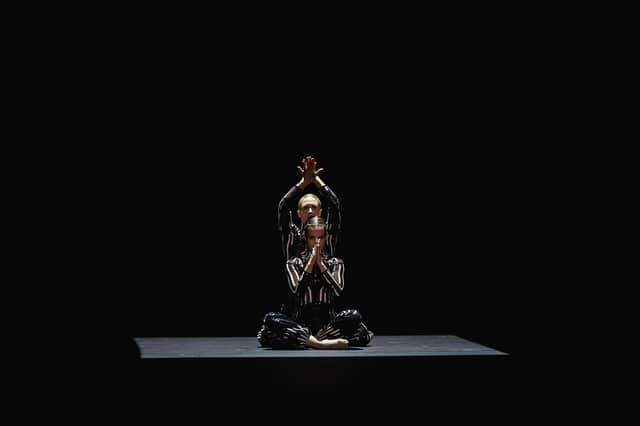

Ballet Nights ★★★★★
Assembly Rooms (Venue 20) until 30 August
Allura ★★★
theSpace @ Niddry Street (Venue 9) until 29 August
Poles ★★★★
Dance Base (Venue 22) until 30 August
Nüshu: Written for Her, On Her, By Her ★★★
C aquila (Venue 21) until 30 August
When Jamiel Devernay-Laurence left Scottish Ballet in 2022, after many years as a popular soloist, he was determined to make his mark. As far as he is concerned, dance is the unsung hero of British culture, and ballet dancers should be as famous as sportspeople. Looking at the talent he regularly assembles onstage under the banner of Ballet Nights, it’s hard to disagree.
In the first week of September, Devernay-Laurence will take a different Ballet Nights line-up to the Theatre Royal in Glasgow (get your tickets now, you won’t be disappointed), but first he’s treating Fringe audiences to an hour of world-class dance. Opening with a powerful re-working of The Dying Swan, performed by former Northern Ballet principal Joseph Taylor, the bar is set high, and all who follow him keep it there.
Sarah Chun (another Northern Ballet principal) delivers an upbeat solo, then joins Taylor for a beautiful rendition of the balcony scene from Romeo and Juliet. The duo have danced this particular pas de deux before, and inhabit it not just with advanced technique, but the pure excitement and curiosity of first love.
Splice, a contemporary dance work incorporating various underground clubbing styles, and performed to music by Floating Points, takes us in a whole other direction. The dancers’ bodies interlocking in complex patterns, then breaking free, the work strikes exactly the right tone for bringing in younger dance fans.
Another superb duet follows, for ballet dancer and viola-player Dominic Stokes, sending sparks flying. But perhaps most exciting of all, is seeing home-grown talent and former Scottish Ballet dancer Amy McEntee strike out on her own with an imaginative, spell-binding solo.
Enjoying The Scotsman's coverage of the Edinburgh festivals? For just £2 a month you can get unlimited access to scotsman.com plus 2-for-1 Fringe tickets. For details visit www.scotsman.com/subscriptions
Ballet Nights brings a much-needed injection of classical dance to the Fringe, but the festival isn't known for its plethora of jazz or tap either. So when the performers of Suitcase Dance Theatre sashay onto the stage for Allura, you can’t help but smile. The Seattle-based company, headed by dance stalwarts Veronica and Mark Mendonca, have many strings to their bow. During a lively hour, the dancers slip in and out of various footwear to facilitate the different styles, including some nice pointe work.
There is a narrative at play here, at first difficult to decipher but then clearly encouraging us to eschew the shiny things in life for real human connection. If it doesn’t always land story-wise, the movement never falters. From snappy upbeat routines to slower, more contemplative pieces, the choreography is easy on the eye and always engaging.
Similarly, a well thought-out playlist of songs refreshes the palate each time, and a through-line of bright red colour (on scarves, shoes, lipstick) gives Allura a bold look. This show won’t change your life, but for fans of tap and jazz, it will certainly entertain you.
Pole dancing has become an increasingly popular artform at the Fringe, helping it shake off associations with shady nightclubs, and achieve recognition for the artistry it displays and physicality it requires. Even then, it still comes with certain expectations, and routines performed on Chinese poles or flying poles are often crowd-pleasing spectacles.
So first a word about what Poles is not. Well executed tricks are not met with spontaneous applause, there is no ‘playing to the crowd’, nor a need for fancy costumes. Instead, this intimate piece gently burns at a steady pace, fusing pole work, live soundscape, and a large steel pipe frame ripe with potential.
A national pole dancing champion many times over, Netherlands-based artist Yvonne Smink is a master of her craft. A slow opening, more contemporary dance than circus, finds her sitting on the floor, back resting against the metal. As she begins to move, and explore the spider-like apparatus, it’s like watching a new-born foal define its own limitations and possibilities. Feet tentatively reach out, arms stretch to touch the next pole, and gradually Smink finds the inner strength (and rock-hard core) to make use of the entire structure.
Sitting behind her at a Moog synthesizer, the aptly-named musician/composer Isaac Poels builds a sound world for Smink to live in. Responding to her movement in real time, the duo feel deeply connected despite never sharing so much as a glance. Aside from marvelling at the impressive strength of Smink’s abdominal muscles, there’s also much to be admired in the simplicity of her approach.
Wearing white sweatpants and a sleeveless vest, she could easily be at a practice session rather than a performance. Seen up close, the gentle pink glow building on her face also lets us know that, effortless though it may seem, pole work is unremittingly hard.
While Smink displays a hard-won physical strength in her show, Jiayi Chen takes us to a place of emotional resilience: her own, and the many women who came before her. Hundreds of years ago in rural China, women denied an education and forced into arranged marriages were living lonely, difficult lives. As a way to communicate with each other in secret, they created Nüshu, a script only they could read and understand. This fascinating piece of female history is the starting point for Chen’s intimate and moving show, but by no means the only tale she has to tell.
Although advertised as a solo work, Chen is in fact joined by two dancers who fill the stage with movement, and another performer who plays her grandmother. As she paints a backdrop, and the bodies of the other women, with Nüshu letters, Chen shares deeply personal stories. She is, we’re told at the end, eager to keep these family narratives (and people’s knowledge of Nüshu) alive, and it’s a privilege to bear witness to her sadness and tragedy.
The production values aren’t high here, and perhaps due to translation issues, there’s unnecessary repetition in the dialogue. It would also be nice to see the dancers come together more, in a physical manifestation of the sisterhood being spoken of. Regardless, this memorable experience still has much to offer.
The Scotsman’s arts newsletter is now sent twice a week - subscribe today
Enjoying the Arts & Culture journalism on scotsman.com? Make it easier to find by selecting us as a preferred Google source
Want the latest Scottish headlines sent directly to your phone? Sign up to our new WhatsApp channel here
Comments
Want to join the conversation? Please or to comment on this article.