
Edinburgh Book Festival round-up: Ali Smith | Ann Patchett | Douglas Stuart | Tareq Baconi + more
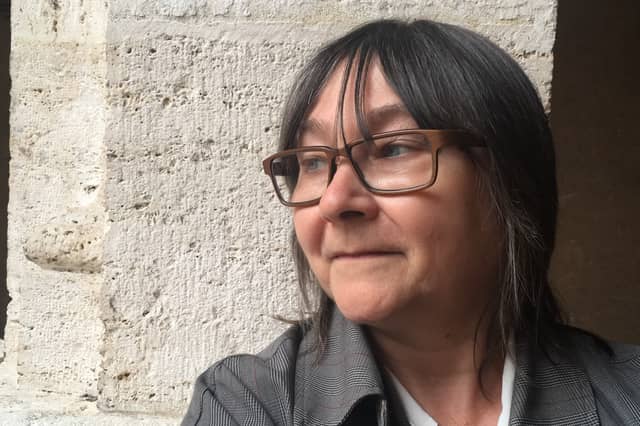

Our final round-up from this year’s Edinburgh International Book Festival includes some ruminations on language, truth and untruths, a shocking frontline report from Gaza, and the evergreen importance of kindness, hope and imagination.
The best fiction is capable of speaking truth, and the best fiction writers often address themselves to the truths of our times. Ali Smith is one such writer.
“I’m a storyteller, not a reporter,” she told a sell-out crowd at the Book Festival on Saturday. “I’m picking up on what narratives are to us now. I’m writing fiction, but fiction is one of our best ways to get to truth.”
Her most recent novels, Gliff and Glyph, touch on the darkness of the present moment, from bodies being pulled from rubble in Gaza to our own atomised society, hiding behind our smartphones, losing our capacity to communicate directly with one another.
Smith is profoundly alert to truth, and to untruth.
“Did you know I’m friends with PJ Harvey?” she asked the audience. “I didn’t either! AI says we are old friends, that we’ve even written songs together.” She is not anti-AI, she says, but “ripping up books and feeding them into the machine so it can do what it likes with the language” appals her.
Language is where it’s at for Smith. It’s clear from her dexterity and playfulness with words that she is fascinated by then, where they come from, all the myriad places they can take us. Take “glyph”, for example, a letter of the alphabet, the smallest unit of meaning: see how it has expanded under her gaze to a plethora of meanings, to birth one novel, then a second.
Enjoying The Scotsman's coverage of the Edinburgh festivals? For just £2 a month you can get unlimited access to scotsman.com plus 2-for-1 Fringe tickets. For details visit www.scotsman.com/subscriptions
Smith was clear that the smallest act of kindness between human beings is what gives us hope in the dark. In that, she was on the same page as multi award-winning American novelist Ann Patchett, addressing a sell-out crowd in the 1200-seater McEwan Hall.
After a journey to Edinburgh from Nashville fraught with delays and cancellations, Patchett revealed something remarkable.
“When I am in an airport, I am my best self. I know I have no control. There is nothing I can do except to meet the situation with kindness.” She added that she is trying to apply “the lesson of airports” to other non-airport aspects of her life.
A frank, direct speaker, Patchett told us stories: of her kind husband, gently helping her exit a difficult wedding reception, and of meeting in later life the nun who had terrorised her early years at Catholic primary school. Realising her judgment about the woman had been wrong, she got to know her and the two became good friends.
Talking about her latest novel, Whistler, she said the focus in her writing has changed as she’s got older:
“There are no terrorists coming in through air vents, no giant anacondas. I’m interested in how you write a book where love is the driving engine, not danger or fear.”
Echoing Smith’s sentiment about mobile phones, Patchett said her ability to juggle her commitments as wife, bookseller (she owns Parnassus Books in Nashville) and writer is greatly helped by not having one. With typical generosity, she concluded the session by swapping book recommendations with the audience.
One of her recommendations was John of John, the new novel by Scots-born Douglas Stuart, who was in the hotseat in the McEwan Hall the following day. At this point, a shout-out must go to the interviewers, Roxani Krystalli and Jackie Kay, superb in both cases. Kay and Stuart are old friends, which made for a relaxed and insightful conversation.
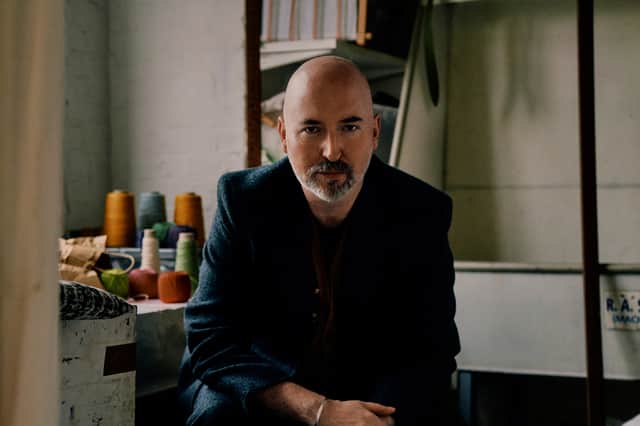
Qualities of listening, empathy and kindness come to play in the making of John of John. In 2019, while waiting for his first novel Shuggie Bain to be published, Stuart booked a 12-week trip to the Outer Hebrides. There, as a not-yet-published novelist, not-yet-Booker-winner, he knocked on doors, drank tea at kitchen tables and listened, praising the “generosity” with which he was received.
The conversations fed into the story of father and son John and Cal, and Ella, Cal’s granny, living in a croft on the east side of Harris, a mile from the nearest neighbour. Their story is woven together like the hues in Harris Tweed, quietly exploring what is often left unsaid. The book’s publication marks the end of 20 years of work by Stuart on a “triptych” of Scottish queer stories. John of John is on the current Booker Prize longlist and, in Kay’s opinion, is his best book to date.
Philippe Sands’ East West Street is the kind of non-fiction book which has the page-turning quality of a good novel. This felt like a timely moment to revisit the book, on its tenth anniversary, as it centres on Lviv in Ukraine, where Sands’ grandfather was born, and where the two lawyers who developed the legal concepts of genocide and crimes against humanity studied.
After Nuremberg, the terms fell out of use, until they were required again in the 1990s to deal with Rwanda and the former Yugoslavia. Now, they seem to feature almost daily in our news bulletins.
In his job as an international lawyer, Sands is counsel for the Gambia, which is bringing a case against Myanmar for its alleged genocide against the Muslim Rohinga community. The judgment, expected in October, is “a huge historic moment”, and is being closely watched in light of the case being brought by South Africa against Israel, on similar grounds.
Sands’ involvement in the Myanmar case meant he was careful not to use the word “genocide” to describe the situation in Palestine. It is used without compunction, however, by Fatima Bhutto, introducing the anthology she has co-edited, Gaza, The Story of A Genocide, a collection of testimony, poetry, art and frontline reporting.
Her conversation with one of the contributors, Tareq Baconi, laid out some shocking facts: 97 percent of farmland in Gaza has been destroyed, 90 per cent of livestock, 82 per cent of buildings. The people there experience (in Baconi’s words) “zionism in its most unadulterated form… a political movement commited to the eradication of Palestian life in Palestine”.
And it gets worse: explosives hidden in doctors’ pagers; snipers targeting children like a game, aiming different body parts; charities paying black market prices for formula baby milk, which is one of many products banned by the Israeli blockade. All of these are things it feels important to know, but it does leave one with a sense of deep despondency.
So I was very grateful for the next event, in which Baconi joined Israeli scholar and activist Ilan Pappé for a discussion on Restorative Justice. Pappé is a scholar and activitst, a man of long experience and good-natured wisdom. His latest book, Israel on the Brink: Eight Steps for a Better Future, looks to the future, as does Baconi’s forthcoming book, What Now? On Palestine, Freedom and Our Global Future.
Another fine interviewer, Glasgow University’s Esa Aldegheri, invited both writers to consider the role of imagination in resistance. Both agreed on the importance of a “right to return” in any future settlement and, while a pre-1948 Palestine can’t be regained, it’s important to imagine (in Pappé’s words) “a new Palestine which is equable and survived the nakba”.
While the collapse of Zionism might feel a long way off (perhaps not so long, according to Pappé) and a new, free, decolonised Palestine hard to envision, we must take to heart what we have heard again and again through this festival about the power of imagination. The courage and capacity to imagine is, surely, itself a cause for hope. Susan Mansfield
The Scotsman’s arts newsletter is now sent twice a week - subscribe today
Enjoying the Arts & Culture journalism on scotsman.com? Make it easier to find by selecting us as a preferred Google source
Want the latest Scottish headlines sent directly to your phone? Sign up to our new WhatsApp channel here
Comments
Want to join the conversation? Please or to comment on this article.