
The Berlin Passport Office by Flora Johnston review: ‘an appealing whiff of authenticity’
Thanks to the author’s meticulous research this thriller feels like the real deal, writes David Robinson
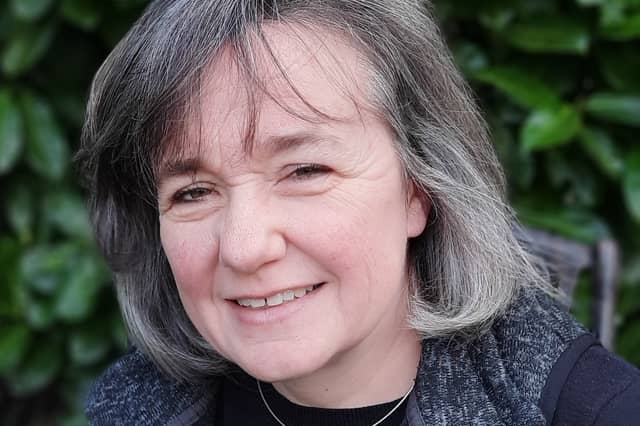

I am mildly disappointed that Corran Rutherford, the Pittenweem-based writer spying for the British in Nazi Berlin and the main protagonist of Flora Johnston’s latest novel, didn’t exist in real life – not least because while there she was supposedly turning out features for The Scotsman. This is, however, more than counterbalanced by the realisation that some of Johnston’s other characters - especially the ones one might have thought implausibly heroic – were very real indeed.
Take Frank Foley. Ostensibly a mild-mannered bureaucrat running the Berlin Passport Office, he had worked as an MI6 spy for two decades, and saved so many Jewish lives in the run-up to the outbreak of the Second World War that he should be celebrated as a British Oskar Schindler. Considering the risks he ran – not least going into Sachsenhausen concentration camp and securing the release of political prisoners – I am embarrassed not to have previously heard of him.
Or what about Wilfrid Israel? How unlikely a character is a gay Jewish socialist heir to a Berlin department store older and bigger than Jenners who saved even more Jewish lives through paying for his employees to emigrate, buying others out of concentration camps and helping to set up the Kindertransport programme? Next time you read Christopher Isherwood’s Goodbye to Berlin, look out for him: he is fictionalised as Bernhard Landauer.
Hubert Pollack is even more unlikely. He was one of nature’s “fixers”: while working for Wilfrid Israel, his contacts ranged from backstreet forgers to the Gestapo, whom he had to know well enough to bribe without being arrested. With Israel providing the lists of endangered Jews and the money, Pollack greasing Nazi palms and Foley bending the rules at the Passport Office, at least 10,000 Jews were saved.
Johnston weaves her fictional heroine into a story involving these three men by having Corran deliver a talk about her novels in Berlin. The wife of a prominent Luftwaffe officer is known to be a fan and MI6 hopes that Corran might, in the course of developing a friendship with her, be able to corroborate what Foley has uncovered from an informer about the build-up of German air power.
It is easy to see why Johnston’s historical fiction has such a reputation for meticulous research. There is a level of detail here that goes beyond the usual simplicities of thrillers set in the Nazi era while also capturing Corran’s sense of shock at both Berlin’s accelerating moral collapse and her Peace Pledge-supporting sister Stella’s head-in-the-sand naivety back home in Scotland.
Some readers might find the importance Johnston puts on Corran’s family diffuses the tension too much (on one page, for example, I counted 14 different relatives within 14 lines, none of them particularly important to the plot). The scenes back in Scotland seem to belong to an altogether different novel: one about tensions between siblings and the pressures of Corran’s single mother - important, no doubt, but not exactly matters of life and death.
In Berlin, though, everything is. A pro-appeasement ambassador can pull the plug on Foley’s covert actions at any time, servants cannot be trusted, any stranger could be working undercover for the Gestapo, and no-one at the Passport Office has any diplomatic protection. If caught breaking the law, they’ll all go to Sachsenhausen just like all the dissidents and Jews they are trying to save.
Although there is a compellingly tense scene on a train leaving Germany towards the end of the novel, one occasionally feels that Johnston could have done more to ramp up a sense of jeopardy. Perhaps her respect for the historical record stays her hand. As she reveals at the end of the novel, one of her great-aunts, whose letters from the 1919 Paris Peace conference inspired her novel The Paris Peacemakers, knew Foley from working at the British Embassy in Berlin, and another great-aunt had the academic background she gives to Corran Rutherford. And even though Johnston is writing fiction, it is fiction with a strong and appealing whiff of authenticity.
The Berlin Passport Office, by Flora Johnston, Alison & Busby, £22
The Scotsman’s arts newsletter is now sent twice a week - subscribe today
Enjoying the Arts & Culture journalism on scotsman.com? Make it easier to find by selecting us as a preferred Google source
Want the latest Scottish headlines sent directly to your phone? Sign up to our new WhatsApp channel here
Comments
Want to join the conversation? Please or to comment on this article.