
Sleuth-Hound: The Case of the Real Sherlock Holmes by Lindsey Fitzharris review: 'masterful'
Before his fictional counterpart stole the spotlight, a formidable real-life sleuth was amassing evidence and fighting for justice on the streets of Edinburgh, writes Dean Jobb


His quick eye and rapid-fire conclusions were legendary. Students studying medicine at the University of Edinburgh in the late 19th century were spellbound as one of their instructors, Dr Joseph Bell, revealed the occupations and backgrounds of patients he had never met. He often diagnosed their illnesses or ailments as well, before they spoke a single word. Bell could identify a man’s trade by glancing at the calluses on his hands and tell soldiers from sailors by their gaits; dirt stuck to shoes told him where people had been walking. He seemed able to read minds, but he was simply paying attention to details that others overlooked. “Quite easy, gentlemen,” he told his students after one session, “if you will only observe and put two and two together.”
Do these sound like the lightning-fast deductions of a certain fictional detective? They should, because among Bell’s astonished students was Arthur Conan Doyle, who would endow his greatest creation, Sherlock Holmes, with Bell’s gift for observation and his belief that recognizing “the vast importance of little distinctions” would help the police to solve crimes.
Bestselling author Lindsey Fitzharris turns a Sherlockian magnifying glass on Bell in Sleuth-Hound, tracing the life and career of a medical pioneer whose accomplishments have been overshadowed by the fictional hero he inspired. Medicine was his family’s business – after his great-grandfather joined Edinburgh’s Royal College of Surgeons in 1771, three more generations of Bells would appear on its rolls for the next 140 years (Joseph Bell, who died in 1911, was the last).
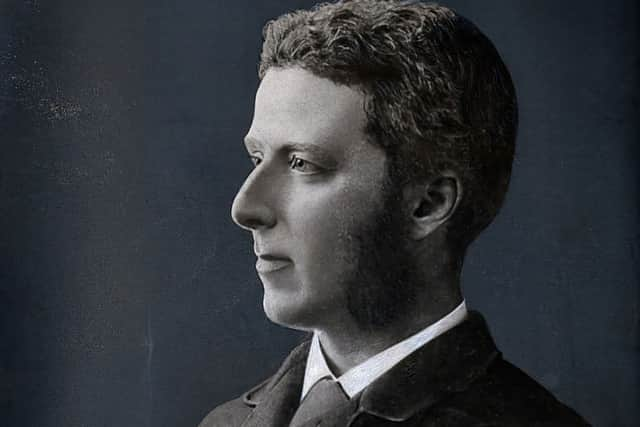
When not captivating students with his ability to size up and diagnose patients, Bell practiced at Edinburgh’s Royal Infirmary, where he championed sanitation and antiseptics in an era when many doctors still resisted the notion that germs spread disease. He welcomed the first women admitted to a British medical school and worked to professionalize nursing, publishing a textbook on the vital role nurses played in patient care and earning praise from Florence Nightingale.
He also contributed to the development of forensic science. For two decades he helped Edinburgh’s police surgeon, Dr Henry Duncan Littlejohn, to investigate murders. Together they compiled medical and ballistics evidence in several high-profile murders. Even Jack the Ripper’s rampage caught Bell’s attention – at the height of the Whitechapel murders in 1888, he tipped off Scotland Yard that the killer might be a disgraced Scottish doctor. While Bell rarely appeared in court as an expert witness and revealed few details of his forensic work, Fitzharris does an admirable job of unearthing and piecing together the surviving evidence to document his contributions.
READ MORE: Working People: A Family Through Three Centuries by James Hunter review: 'fresh, precise, immersive'
Conan Doyle acknowledged his debt to Bell. Holmes, he revealed in 1892, was “the literary embodiment” of his former instructor. Bell, however, was an intensely private man and he feared – rightly – that his sudden fame as the “real” Sherlock would overshadow his medical achievements. And Fitzharris makes a convincing case that Littlejohn, who championed crime-scene photography and other forensic breakthroughs, inspired the crime-fighting science woven into the Holmes stories.
This is a quadruple biography, tracing the fictional life of Holmes as well as the careers of his creator and the pair of medical sleuths whose deeds and accomplishments inspired him. Fitzharris vividly recreates Victorian era Edinburgh, with its grand edifices, fetid slums and grisly crimes. The author of two previous books on medical trailblazers, including The Butchering Art, a biography of Edinburgh’s antiseptic surgery pioneer Joseph Lister, she grounds Bell’s story in the early development of medicine and forensics.
“In his quiet, unassuming way, Joe Bell helped invent a new way of thinking,” she writes. To him, “the cause of every illness, like the perpetrator of every crime, would betray itself to a sufficiently tenacious observer.” In the novel The Sign of Four, Holmes proclaims himself “the last and highest court of appeal in detection.” As Fitzharris makes clear in this masterful account, a formidable real-life sleuth was amassing evidence and fighting for justice before his fictional counterpart stole the spotlight.
Sleuth-Hound: The Case of the Real Sherlock Holmes by Lindsey Fitzharris, Allen Lane, £25
Dean Jobb is the author of The Case of the Murderous Dr Cream (Algonquin Books), the true story of a Glasgow-born serial killer who left a trail of victims in Canada and the United States before poisoning four women in 1890s London, see deanjobb.com.
The Scotsman’s arts newsletter is now sent twice a week - subscribe today
Enjoying the Arts & Culture journalism on scotsman.com? Make it easier to find by selecting us as a preferred Google source
Want the latest Scottish headlines sent directly to your phone? Sign up to our new WhatsApp channel here
Comments
Want to join the conversation? Please or to comment on this article.