
Selected Poems 1991-2026 by Jackie Kay review: 'direct without being unsubtle'
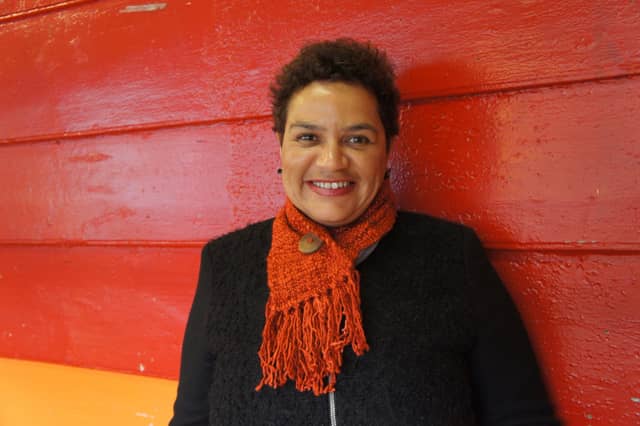

The new volume of Selected Poems by former Makar Jackie Kay offers a useful introduction to her work, writes Stuart Kelly
There are two distinct kinds of “Selected Poems”. Some on my shelves – and come to glance at them, it’s often “Selected Poetry” – tend to be compiled by editors, and have the tang of the academy to them. When the author herself (in this case) is compiling the book, however, there is an element of conscious curation. The selection is, in a sense, a part of the oeuvre, an attempt to highlight or determine how the work is read. This can cause problems: WH Auden was a notorious tinkerer, and poems alter between collection, selection, collected and complete. Sylvia Plath has recently been re-edited, and the new edition has 542 poems in contrast to the 274 in the earlier edition edited by her widower Ted Hughes. One has some sympathy with John Buchan’s anxiety about what “literary resurrectionists” might do to Walter Scott’s reputation, republishing work he either personally rejected or was too ill to complete.
Jackie Kay’s new Selected does have a form of narrative arc. When I reviewed May Day (2024) I thought its unsentimental elegiac tone was a form of shift away from her more crowd-pleasing work. This new Selected – unlike the previous Darling: New & Selected Poems of 2007 - is untitled. It includes the poem “Darling”, the final lines of which might have served as an epigraph for the whole: “The dead don’t go till you do, loved ones. / The dead are still here holding our hands.” It’s this kind of paradoxical “ulplifting threnody” that typifies the volume. Indeed, this death proximity is there from the outset. Somehow the lines from the birth mother in “Baby Lazarus”, the fourth poem in the sequence The Adoption Papers, take on a different set of resonances in this new frame: “When I got home / I went out into the garden / Liking it when the frost bit / My old brown boots / And dug a hole the size of a baby / And buried the clothes / I'd bought anyway, just in case.” (Shades, in a way, of the six word story actually not written by Hemingway – “For sale. Baby shoes, never worn”).
There are a number of things this distillation brings into focus. One is a form Kay uses frequently of narrative quatrains (“Twelve Bar Bessie”, “Late Love”, “Lucozade”) or triplets (“The Staging of my Body”, “Dusting the Phone”, “Piano, 4pm”) which all then end of a single line. This line is sometimes summary, sometimes contradiction – it reminded me at times of the last line included within the “body” of the poem “Reasons for Attendance” by Philip Larkin that destabilises the whole. Another is the increased confidence in the use of Scots. In “Old Tongue” there is (again) a melancholic engagement with the erosion of Scots. What is curious is that the explosion – “eedyit, dreich, wabbit, crabbit, / stummer, teuchter, heidbanger” – does introduce a distinct lexicon of Scots, whereas other poems – “Bed”, “Fiere”, “Bantam” – have a single word, or none at all. They do have an orthographic “Scottishness”, to convey the recognisably Scots phonemes, but this opens up the rather hazardous hinterland between accent and language – something equally pronounced in work by Emma Grae and Len Pennie.
This is without doubt a useful introduction to Kay’s work, and readers may well want to go on to look at the individual collections (and the dramatic and children’s verse like “The Lamplighter” and "Red Cherry Red”), and indeed to see how the poetry refracts lived experience in ways different to her volumes of memoir and fiction. At her very best she is plangent, acute and direct without being unsubtle. Kay was, of course, the Makar between 2016 and 2021, and it is perhaps for others to consider how the demands of that role – public, spoken, accessible – chime with poetry’s other virtues – private, written and, to quote Emily Dickinson, “tell all the truth but tell it slant”.
That difficult word “accessible” came to mind because of some publications that managed to wend their way to me this week: one, curiously, thanks to Instagram which is not a sentence I thought I’d ever write. One package was a number of books by Alec Finlay, whose concrete works I have long admired. The collection Not Sealions But Lions By The Sea is accessible in the broadest sense, while also being askance and self-contadictory, as in the delightful “But That Had Nothing To Do With Poetry”. Finlay’s epitaphs are laconic, and all the more eloquent for it.
The poet Richard Price has published a festschrift issue of his Painted, spoken zine for Peter McCarey, who turned 70 this year. It is both a tribute from some of our most innovative writers and ought to spur new readers into seeking out McCarey’s “The Syllabary”, perhaps the avant-garde poem of our generation; free at www.thesyllabary.com. It is an intricate machine whose consonant strictures determine the poems – nothing could be further from the “confessional poetry” of Al Alvarez et al. In the festschrift David Kinloch quotes Mallarmé – “cede the initiative to the words” – and with that injunction I would urge you to immerse yourself in this phenomenal work.
Selected Poems 1991-2026, by Jackie Kay, Picador Poetry, £14.99; Not Sealions But Lions By The Sea, by Alec Finlay, Broken Sleep Books, £14.99; For details of Painted, spoken, see www.hydrohotel.net/mags.htm
The Scotsman’s arts newsletter is now sent twice a week - subscribe today
Enjoying the Arts & Culture journalism on scotsman.com? Make it easier to find by selecting us as a preferred Google source
Want the latest Scottish headlines sent directly to your phone? Sign up to our new WhatsApp channel here
Comments
Want to join the conversation? Please or to comment on this article.