
Our Noble Selves by Kate Atkinson review: 'dry, quirky and clever'
Is Kate Atkinson’s new book a work of crime fiction, a historical novel or a comedy? All of the above, writes David Robinson, and a lot more besides
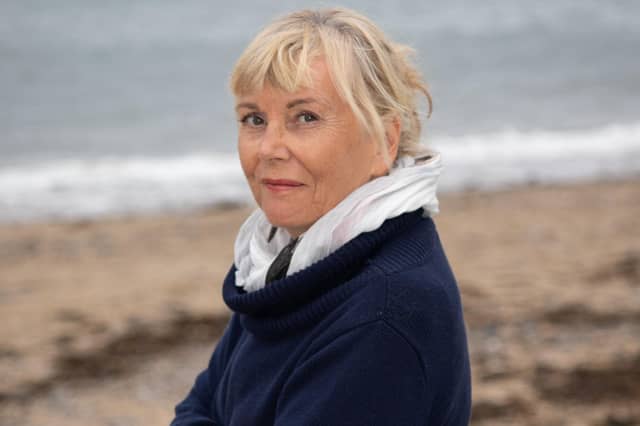

If I were a crime novelist, I’d hate Kate Atkinson. Ever since Case Histories (2004), she has proved that she can pull off all the tricks of the genre - plots that twist and turn themselves inside out and plausibly finger unexpected culprits. Crime novelists would take all that as read. Yet Atkinson has the nerve to throw so many other things into the mix too - a quirky wit, vast social canvas and narrative brio among them. It wouldn’t seem fair.
Strictly speaking, Our Noble Selves isn’t a crime novel, but as it is about an innocent man caught up in a murder and - as his accomplice is his 13-year-old Agatha Christie-reading stepdaughter - that is the first pigeonhole to reach for. And while you could make a convincing case for it to be considered as a spy novel in the same early Fifties mould as Atkinson’s 2018 novel Transcription, it’s not quite that either.
A historical novel then? Chronologically yes, because as its setting - the 1951 Festival of Britain – is more than 60 years ago it would qualify under the rules of the Walter Scott Prize for Historical Fiction. But even though the festival is immaculately researched and depicted, it is more than that too. A comic novel? Absolutely, but again one must cavil: Harry Flynn, the main protagonist, has lost his brother in the recent war, while he himself barely survived being a Japanese POW working on the Burma railway, starved to the point of eating a live mouse, and there is nothing remotely comic about that.
The novel opens in 1949, when within just eight pages we are told how Flynn returned from the Far East and, in search of stability, married a war widow to live in a Wealdstone mock-Tudor semi. When they went off on a three-day honeymoon in Brighton with her young daughter, Veronica, they returned to find the kitchen floor covered with vomit and faeces from their pet dog, a terrier called Mrs Betty. Flynn knows nothing about dogs, but he realises that Mrs Betty thought she had been abandoned to die and he surprises himself by the strength of his feelings for her. The reader isn’t: the only predictable thing in an Atkinson novel is that any decent man is automatically a dog lover.
Still within eight pages, Flynn’s marriage collapses and he finds a job working on a festival that will “show Britain’s best face” both to the world and to itself. Within a few more - and again with her usual blend of pithiness, precision and panache - Atkinson introduces us to a whole range of people who, like him, are trying to flesh out a vision of a forward-looking, colourful, optimistic Britain at a time when hope is still rationed almost as much as butter, and much of the country remains dully monochrome, maybe bombed out and possibly in mourning.
As in Transcription, there are still a small number of people who never lost their fascist sympathies, even though some of them are patently absurd, like Mitzi Blinkhorn - a dead ringer for celebrity cook Fanny Cradock - whose barely edible recipe is mysteriously chosen for the Festival of Britain Cake. After a comically hellish dinner she and her husband Archie host for Flynn (for starters, a live winkle tries to flee the fruits de mer) his troubles begin, and he is fitted up for the murder of a female colleague. He was, the police insist, the last person to see her alive.
Throughout, though, it’s Atkinson’s style - dry, self-questioning, detached, quirky, clever - that hooks the reader. That, and her ability to zoom out from a deliciously dark comedy to one that is studded with social history: “For the first time,” she writes of the festival, “the British public had experienced open-air cafes, spaghetti, hot dogs, ice-cold drinks, soft toilet rolls, and the opportunity to drink wine with a meal. So continental. So modern.”
Ultimately, the genre question is irrelevant. Kate Atkinson writes in one that is entirely and spectacularly her own.
Our Noble Selves, by Kate Atkinson, Doubleday, £22
The Scotsman’s arts newsletter is now sent twice a week - subscribe today
Enjoying the Arts & Culture journalism on scotsman.com? Make it easier to find by selecting us as a preferred Google source
Want the latest Scottish headlines sent directly to your phone? Sign up to our new WhatsApp channel here
Comments
Want to join the conversation? Please or to comment on this article.