
Island of Roe Deer: The Story of Raasay by Roger Hutchinson review: 'light-footed'
Is Raasay really ‘the quintessential Hebridean Island’? This book makes a convincing case, writes Roger Cox
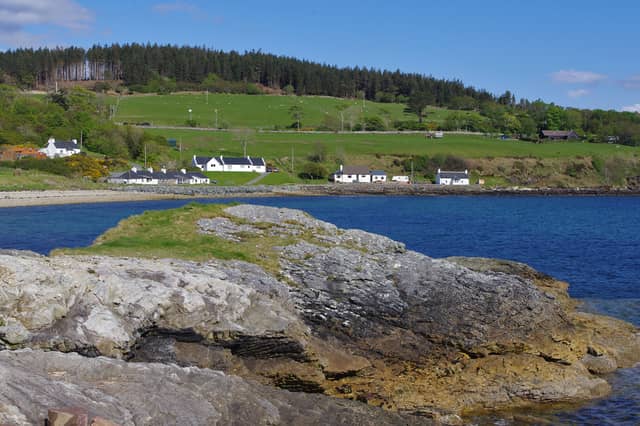

Roger Hutchinson begins this light-footed history of the Hebridean island of Raasay with a tale of journalistic misadventure at The Scotsman. On 28 June 2001, the paper ran a profile piece on one Scott Peake - a remarkable man, originally from Raasay, who had played both shinty and cricket for Scotland, taken part in important archaeological digs with Corpus Christi College in Oxford, been promoted to principal teacher of classics at Dollar Academy and recently been made director of the Saltire Society.
Only trouble was, many of the things Peake claimed simply weren't true: it soon transpired that nobody on Raasay had ever heard of him, a spokesman for Oxford University also denied all knowledge, and shinty experts, similarly unaware of his existence, wondered how he had managed to play for Scotland against Canada, as he said he had, when Canada didn't have a shinty team.
Peake was in fact an Englishman, born in Woolwich in 1964, who had completed a PhD at St Andrews in 1991. When the scale of his deception came to light he was swiftly fired from his role at the Saltire Society and subsequently left his post at Dollar Academy. No doubt The Scotsman's editorial conferences also saw one or two frank exchanges of views in the summer of 2001, and Hutchinson evidently derives a certain degree of pleasure from noting how easily Peake was able to pull the wool over people’s eyes.
While there's probably a doctorate waiting to be written on why Central Belt Scotland was so eager to embrace this allegedly high-achieving Hebridean, what primarily concerns Hutchinson is why, of all the Scottish islands, Peake chose to say he was from Raasay.
The answer, he suspects, lies in a 1976 thesis by (a real) Cambridge University student called Richard Sharpe, later published in two volumes as Raasay: A Study in Island History. In it, Sharpe claims that the island, though only 24 square miles in area, had experienced "almost all the major influences and trends in the history of the Western Highlands and Islands." Hutchinson concludes that Peake, for all his faults, had at least done his research: "if he was going to be an echt Hebridean... he must settle for no less than quintessential Hebridean roots."
The idea that Raasay has somehow experienced more than its fair share of history, to the extent that is is somehow the quintessential Hebridean island, might sound fanciful, but the rest of Hutchinson's book makes the case pretty convincingly. The oldest evidence of human settlement on the island, at a rock shelter by Loch a' Sguirr, suggests habitation from 7629 BC to 7245 BC. There are three Neolithic dolmens dating from around 3000 BC, and a Bronze Age spearhead found near one of these is now in the care of the National Museums of Scotland, and is thought to have belonged to "an elite Late Bronze Age warrior" sometime between 950 and 750 BC.
Hutchinson presents evidence that the missionary St Moluag may have established a chapel at Churchton Bay sometime in the 6th century, as part of the spread of Christianity across Scotland; then, between 1098 and 1266, Raasay and the rest of the Hebrides were officially ceded to Norway, following several hundred years of Norse visits and raidss - indeed, it is thought that the island's name is derived from the Norse words "rá" for roe (as in roe deer) and "ey" meaning island.
If that all sounds somewhat general, Raasay's role in the wider history of the region soon becomes much more specific. Malcolm MacLeod of Raasay missed the start of the 1745 and the march to Derby, but he took 100 men to join the siege of Stirling Castle in January 1746 and they subsequently served in the front line at the Battle of Culloden, taking part in the final, doomed Highland charge. As a consequence, in May that year a Royal Navy sloop, HMS Furnace, anchored off Raasay and put soldiers ashore who proceeded to burn every house in sight and kill all the islanders' livestock. Later that summer, Raasay men rowed the Young Pretender from Skye to Raasay, where, "much affected" by the devastation he saw, he hid for a time before returning to Skye on his way to safety and exile.
The Clearances, religious upheaval, the Industrial Revolution and two world wars all left their mark on the island, as did the actions of feckless absentee landowners. The story of the Hebrides may indeed be much bigger than Raasay, but - as Hutchinson very ably and entertainingly shows - to tell the story of Raasay is to also tell the story of the Hebrides.
Island of Roe Deer: The Story of Raasay, by Roger Hutchinson, Birlinn, £16.99
The Scotsman’s arts newsletter is now sent twice a week - subscribe today
Enjoying the Arts & Culture journalism on scotsman.com? Make it easier to find by selecting us as a preferred Google source
Want the latest Scottish headlines sent directly to your phone? Sign up to our new WhatsApp channel here
Comments
Want to join the conversation? Please or to comment on this article.