
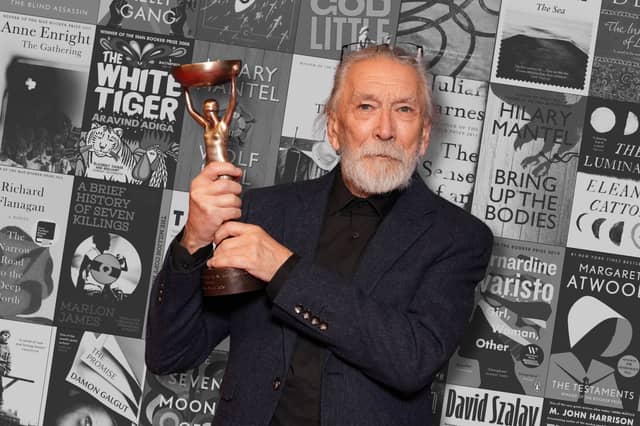


The winner of the Booker Prize 2026 has been revealed, with English author M. John Harrison becoming the first sci-fi author to win the prestigious literary award.
Also the oldest winner to date, the 81-year-old took home the £50,000 cash prize for his post-apocalyptic novel The End of Everything. Set on the coast of Kent in the years after a mysterious crisis caused the collapse of society in Britain.
Harrison was shortlisted alongside past winners Scottish author Douglas Stuart and Jamaican writer Marlon James, as well as nominees including Rebecca Perry, Elizabeth Strout, and Luke Kennard.
Since 2000, there have been 26 Booker Prize-winning authors - including Hilary Mantel and Margaret Atwood, both of whom have won the award twice.
With M. John Harrison the latest writer to receive the award, here are the 28 books which won the Booker Prize from 2000 to 2026.
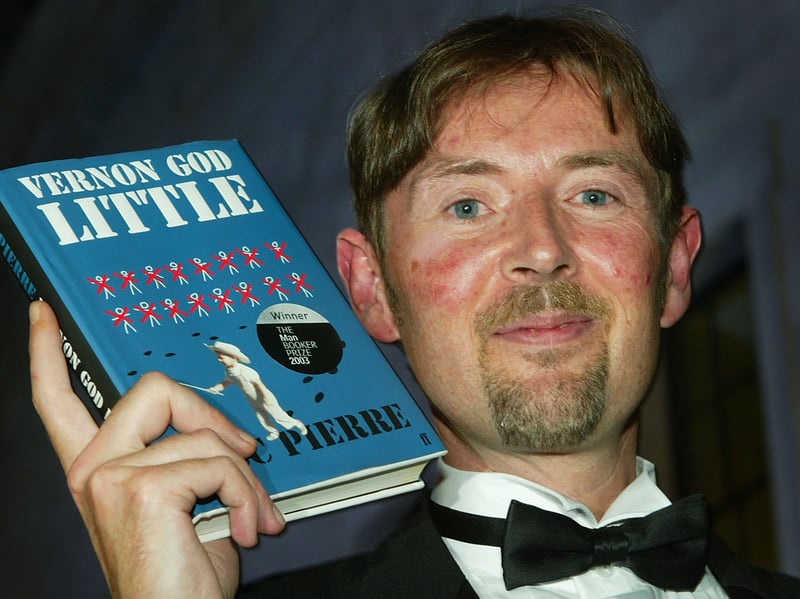
25. 2003 — Vernon God Little by DBC Pierre
Australian author DBC Pierre's black comedy Vernon God Little won the 2003 Booker Prize. “Fifteen-year-old Vernon Gregory Little is in trouble. And it has something to do with the recent massacre of 16 students at his high school. News of the tragedy serves as open invitation to the media and soon the quirky backwater of Martirio is flooded with wannabe CNN hacks all too keen to lay the blame for the killings at Vernon’s feet. Eulalio Ledesma, in particular, sniffs out his opportunity to make good at Vernon’s expense and soon Vernon finds himself drawn into a series of increasingly bizarre (to say nothing of life-threatening) circumstances. Eventually, with the LSD safely deposited and diluted in the ginseng, he succumbs to the workings of Fate and takes off for Mexico and a date – or so he hopes – with the divine Taylor Figueroa.” | Getty Images
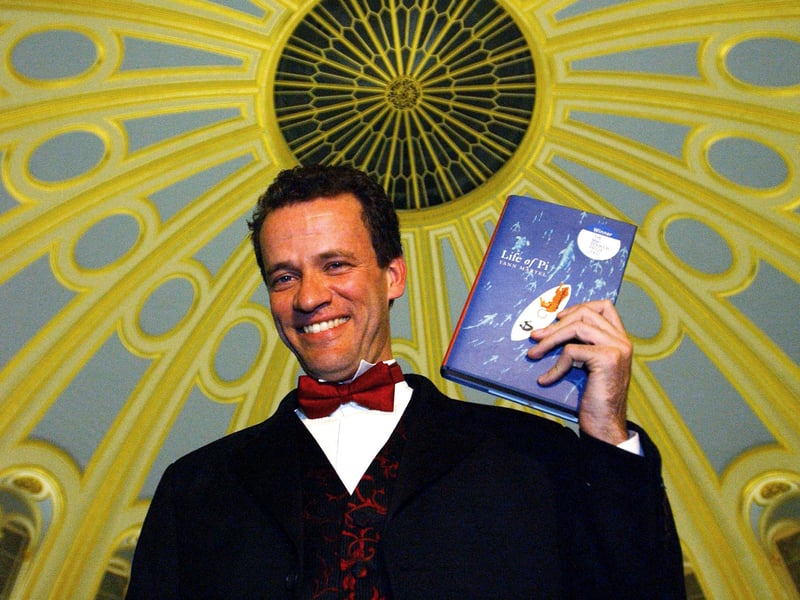
26. 2002 — Life of Pi by Yann Martel
Canadian author Yann Martel's Life of Pi was published in 2001, winning the 2002 Booker Prize. It was adapted into an Academy Award-winning film directed by Ang Lee in 2012. “‘Survival had to start with me. In my experience, a castaway’s worst mistake is to hope too much and do too little.’ After the tragic sinking of a cargo ship, a solitary lifeboat remains bobbing on the wild, blue Pacific. The only survivors from the wreck are a sixteen-year-old boy named Pi, a hyena, a zebra (with a broken leg), a female orangutan – and a 450-pound Royal Bengal tiger.” | Getty Images
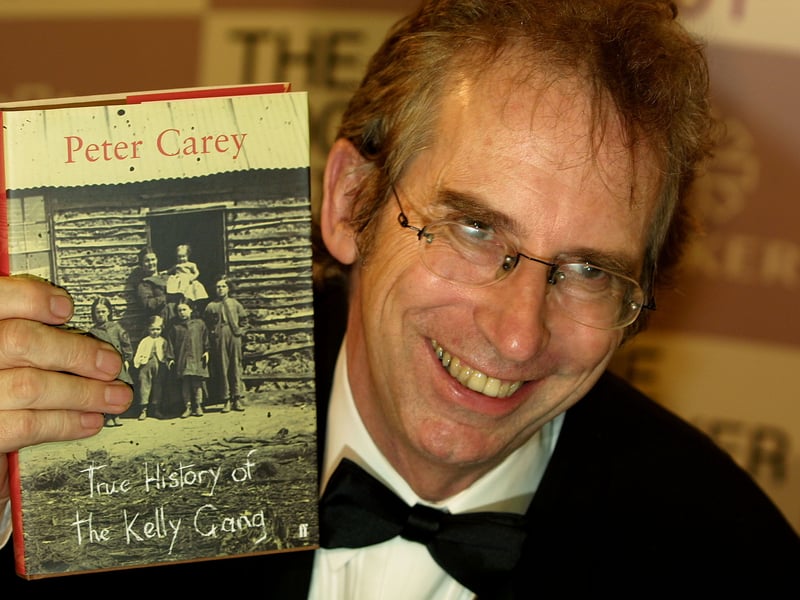
27. 2001 — True History of the Kelly Gang by Peter Carey
Australian author Peter Carey's novel True History of the Kelly Gang, loosely based on the life of Ned Kelly and his gang, took home the Booker Prize in 2001 and was later adapted into a film in 2020. “‘I lost my own father at 12 yr. of age and know what it is to be raised on lies and silence…’ To the authorities in pursuit of him, outlaw Ned Kelly is a horse thief, bank robber and police-killer. But to his fellow ordinary Australians, Kelly is their own Robin Hood. In a dazzling act of ventriloquism, Peter Carey brings the famous bushranger wildly and passionately to life.” | Getty Images
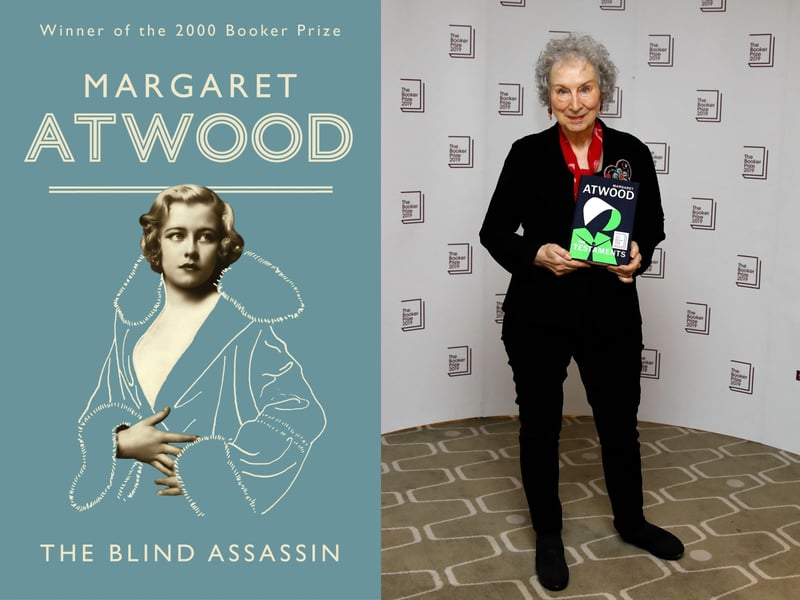
28. 2000 — The Blind Assassin by Margaret Atwood
Canadian author Margaret Atwood won her first Booker Prize in 2000 for The Blind Assassin. “Laura Chase’s older sister Iris, married at eighteen to a politically prominent industrialist but now poor and eighty-two, is living in Port Ticonderoga, a town dominated by their once-prosperous family before the First War. While coping with her unreliable body, Iris reflects on her far from exemplary life, in particular the events surrounding her sister’s tragic death. Chief among these was the publication of The Blind Assassin, a novel which earned the dead Laura Chase not only notoriety but also a devoted cult following.” | Bloomsbury / Getty Images