Hibs 3 - 1 Motherwell: Jack Ross gets winning start as Hibs fight back from early deficit
In his first game at the helm, Jack Ross presided over a victory that elevated the team into the top six and raised spirits in the dressing room and in the stands.
Cheered off the pitch, players who only recently had been scuttling up the tunnel to a backing track of boos, served up only their second home league win of the season and soaked up the new mood of positivity.
Advertisement
Hide AdAdvertisement
Hide AdAgainst high-flying Motherwell, and having gone behind to an early Liam Polworth goal, they swept back and managed to weather a second-half spell of Motherwell superiority to see out the game with attacking flourish.
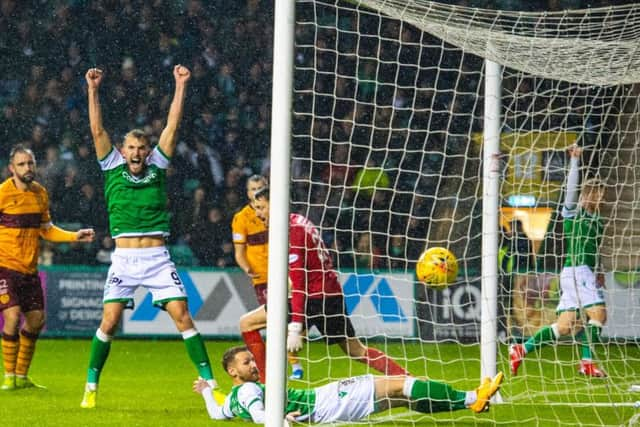

This is the same squad of players who have thrown away leads in more than half of their Premiership games this season and that profligacy ultimately cost Ross’ predecessor, Paul Heckingbottom, his job. Yesterday, they bucked that trend, holding on to the advantage they had established in the first 25 minutes and ultimately adding to their goal tally in the dying minutes.
Having told his players to play with freedom and positivity, Ross immediately alleviated pressure on players who will be only too aware that they were playing for more than three points.
The ongoing assessment of personnel, in training and in matches, will influence the new gaffer’s January shopping list and while this was a victory for the home side to savour, against one of the league’s best sides, it did not paper over all the cracks.
Motherwell had the early advantage, with Jake Carroll forcing Vykintas Slivka into a block before they opened the scoring in the ninth minute. Jermain Hylton did the running down the flank and ghosted past Scott Allan and Jason Naismith. When the ball was played into the danger area, the first shot crashed off the post but Polworth was first to react and buried the second effort.
Ross had sent the team out with playmaker Allan at the head of the diamond and both Christian Doidge and Flo Kamberi up top and the combination proved troublesome for Stephen Robinson’s men.
Allan was the man who played in Kamberi in the 20th minute and the Swiss striker unleashed a perfectly weighted ball into the path of Joe Newell to have a dig. Mark Gillespie managed to prevent that finding the net but he couldn’t gather and that allowed Doidge in to grab the equaliser, despite Peter Hartley’s best efforts at keeping it out.
Four minutes later, the home side had the stadium bouncing when Allan again influenced proceedings, this time picking out the overlapping Naismith who fired a low ball into Kamberi. He managed to fend off the attentions of the surrounding Motherwell defenders and slammed the ball high beyond Gillespie.
Advertisement
Hide AdAdvertisement
Hide AdTwo goals that imbued the Leith side with confidence, the relative ease with which they were conceded infuriated the visiting manager.
But it was a contest that was a long way from being won at that point, as both sides played with an attacking mindset and burst forward at pace.
The second half saw the guests exert their authority. The assets that have taken them into the Europa League spot were evident as they tried to get back on level terms. There were efforts from Carroll, Devante Cole and Chris Long as they took control of the midfield.
And Motherwell had a very good shout for a penalty when Ryan Porteous clumsily bundled Long to the turf in the 58th minute, after the striker had nutmegged him en route to the box.
But, having inherited a side who have conceded too many points from positive positions this season, Ross made changes to stall the momentum and allow his men to see out the victory.
Sending on both Martin Boyle and then Daryl Horgan, he got the Leith side back on the front foot and, with 86 minutes on the clock, he was able to exhale as the latter rattled home the third goal that made for a less stressful final few minutes and provided him with a winning start to his reign.
There are still weaknesses that need to be addressed as Ross weighs up his squad options but, going forward, he at least has Hibs on the front foot and the fans feeling positive again.